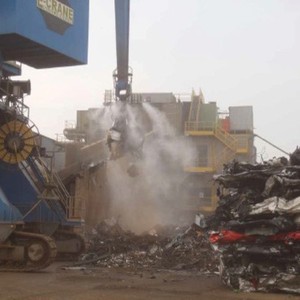
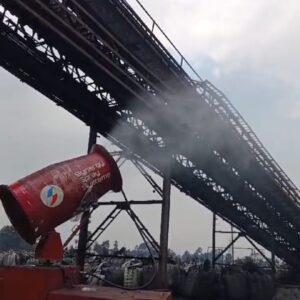
FAQ & RESOURCES
What is mean by dust suppression system?
It is a technique to contain both visible dust and non-visible respirable dust particles present in the atmosphere by spraying of liquids by strategically placing spray nozzles. Dust particles are either made to settle down or Agglomerate with micro liquid spray particles.
Its an assembly of drawing liquids from source and deliver the liquids at a specified pressure using spray nozzle and associated system and suppress dust.
Where the dust control systems are used?
It used in places where occupational and environmental standards are to be maintained which includes cement processing plants, coal handling plants, silica manufactuing units, limestone units, wood pulp processing units, Quarry as well as Public places
Improved occupational, health and safety by reducing respirable and inhalable dust, irritation and vision impairment
Increased equipment performance and reliability
Improved production quality by avoiding chemical additives
Reduced Machinery maintenance costs with lesser wear and tear
Clean up costs reduced
Natural suppressant of unpleasant odors
Creates a cooler environment for workers on-site
What are the types of dust suppression systems available?
By place of installation
1. Indoor DSS
2. Outdoor DSS
By system
1. Fogging or Misting system
2. Dust suppression cannons
By techniques:
1. Dry fog dust control misting system
2. wet DSS
What is Particulate matter?
Particulate matter or aerosol particles is the sum of all solid and liquid particles suspended in air and many of the particles are hazardous. This complex mixture includes both organic and inorganic particles, such as dust, pollen, soot, smoke, and liquid droplets. These particles vary greatly in size, composition, and origin.
coarse particle size ranging from 2.5 to 10 µm (PM10 – PM2.5).
Fine particles are up to 2.5 µm (PM2.5).
ultra fine particles are smaller than 0.1 µm.
What are the different pressure range of dust suppression misting system?
Dust control Sprinkler systems uses a pressure range of 30 bar (435 PSI) (1 bar = 14.5 PSI)
High pressure misting system operates in the pressure range of 50 to 80 bar
Dust cannon operates in the pressure range of 6 bar to 20 bar
Factors to consider while selecting right system your requirement
The process and material producing the dust. Availability of utilities and resources includes electricity, compressed air, water.
What is the dust particle size?
A dust particles ranging in diameter from 0.1 to 400 microns are airborne a dust particle of 5 microns will continue to follow the air stream around a water droplet of 200 microns, therefore, avoiding collision. With the dust particle and a water droplet of similar size, the air stream is not as great and collision occurs, causing agglomeration.
What liquids are used for dust settlement?
plain water
surfactants
foam
binders
What are the nozzles used for dust settlement system?
Selection of spray nozzles are based on drop size of the individual particles and spray pattern. Following spray nozzles are used for dust suppression.
• Air atomizing nozzles: produce the smallest drop sizes, followed by fine spray, hollow cone, flat fan and full cone nozzles.
• Higher pressures mist nozzles: yield smaller drops, and lower pressures yield larger drops.
• Low Pressure mist nozzles: Lower-flow nozzles produce the smallest drops, and higher-flow nozzles produce the largest drops.
• Fine Spray Hollow cone Nozzles
• Fine Spray Full Cone Nozzles
What will be the impact if the dust settlement is not performed in industrial setup?
Violation of environmental and occupational standards
Wear and tear of mechanical parts like conveying pulleys, idlers, belting, and motors
Damage to conveyor equipment and other associated equipment
Reduced productivity of employees
RESOURCES
OUTDOOR DUST SUPPRESSION SYSTEM
It is designed in accordance with industry standards. With our own R&D, production and after-sales provide the perfect solution to solve your dust problem. we provide the best solution to dust problems.
1. Cold Fog DSS
2. Plain Water DSS
3.Sprinkler DSS
INDOOR DUST SUPPRESSION SYSTEM
It uses high-pressure water fogging which creates a fine fog consisting of very fine water droplets (less than 10-micron size) in diameter. These tiny water droplets absorb even the smallest dust particles in the atmosphere without making the ground wet and best suited for dusty environments.
DUST SUPPRESSION SYSTEM FOR CRUSHER PLANT
Dust suction
Dust Suction is widely used by installing higher capacity exhaust fans to recover suspended particles using special fabric. Operational expenses are very higher in this method. installation by almost closely sealing all the moving parts, such as belts, screens, crushers, loading, and unloading duct.
Sprinkling water
The dust suppression sprinkler system sprinkles water at the points where dust is emitted. This is an economical way of suppressing the dust but the water consumption is higher. An efficient sprinkling delivery system reduces water consumption and the dust is suppressed effectively. Our dust suppression plant is based on the sprinkling principle by Water fogging.
WATER FOGGING MISTING SYSTEM
This system consists in applying to the points of dust emission like exchange points between the conveyor belts, hoppers, jaw and impact crushers, a spay of water with specially designed high-quality mist nozzles that produce a mist made of minute droplets. Each point of application is connected to a network of nylon tubing with pressurized water from 60 to 110 kg/cm2 (900 psi to 1550 psi).
The water consumption is very low and the installation is quick and easy.
Upstream of the pressurization pump some filters having a fine mesh ensure the functionality of the system and avoid any clogging of the nozzles.
For the treatment on the transit or working areas we can supply fog cannons for a range up to 50 meters which are provided with an automatic or remote-controlled rotation system.
DUST SUPPRESSION SYSTEM IN COAL MINES HANDLING PLANTS
Water spray applications are one of the principal means of controlling airborne dust in coal mines. Since many coals are hydrophobic and not easily wetted by water, wetting agents can be added to the spray water in an effort to improve coal wetting and assist with dust capture.
Tags: Fog Mist in coal handling plants manufacturers in Odisa Chennai India. CHP