
Storm Tank Cleaning Systems
Flushing jets and nozzles that clear sediment from storm tanks and sumps automatically.
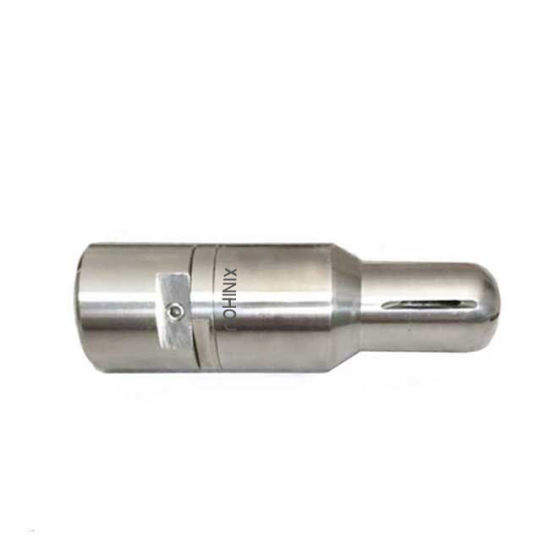
During heavy rain, storm tanks are utilized to store excess water from the sewage system. This helps prevent sewage treatment plants from becoming overloaded. Once the contaminated water is stored in the tanks, it is released back into the sewage system when it can be managed more effectively. This prevents the water treatment systems in cities from becoming overwhelmed and overflowing during rainy periods. However, the water stored in these tanks contains a large number of organic and inorganic contaminants. As the water may remain in the tanks for several days, significant sedimentation occurs. Due to the presence of organic substances, bacterial activity can lead to the formation of putrid and toxic residues. These residues pose serious health and contamination risks if left unattended, and can ultimately hinder the effective operation of the storm tanks.
Impingement Cleaning
Impingement cleaning is a common method for cleaning storm tanks, where an eductor system creates a swirl as the tank empties to remove buildup and debris. However, this method may not always provide a thorough clean, especially when it comes to removing toxic deposits. Fortunately, the Storm Blaster impingement cleaning system offers an effective solution for tackling even the toughest deposits. One example of the Storm Blaster in action is the Synergy spray Tank cleaner, which was recently installed in a Victorian storm tank. This powerful impingement cleaning system uses a sweeping plane that cuts below the horizontal line to ensure a complete clean while protecting the surrounding framework. Over time, the sweeping plane covers every inch of the tank, removing all debris and buildup for a thorough clean.
High Controlled Cleaning
High-powered cleaning is necessary for storm overflow tanks, and the most suitable systems for such applications are our rotating tank cleaners. However, we have made several modifications to the standard design to better meet the needs of our water utility clients.
Designing for Storm Tank Cleaning
To optimize storm tank cleaning, the design of the Orbitor has been modified to create a faster and less precise cleaning pattern. While the Orbitor is capable of developing an accurate spray pattern over time for other applications, a precise spray pattern is not strictly necessary for non-sterile storm drain cleaning. Instead, a quick and powerful wash cycle is required to remove debris and buildup while minimizing water usage.
Powerfully Planned Storm Tank Cleaners
Any storm tank cleaning system must be designed to withstand harsh conditions and be adaptable to different situations. The cleaning heads may become clogged and require self-cleaning mechanisms. The equipment must also be able to operate in varying temperatures and withstand potential wear and tear. Given that storm tanks are often located in confined spaces, it is essential to have a maintenance-friendly system that is easy to repair. The primary objective of an automated storm tank cleaning system is to reduce labor time, so having a complex and cumbersome cleaning process would be counterproductive. Our storm tank cleaners are designed with durable materials to prevent breakage and feature a self-cleaning mechanism to prevent deposits from building up on the equipment. Additionally, our cleaners are fully operational even after being submerged in water, making them ideal for tough storm tank cleaning jobs.
What we need to recommend a solution
Share the process conditions and we will suggest the nozzle type, size and layout.
Process goal
What the spray must achieve: clean, cool, coat, humidify, scrub or suppress.
Liquid
Water, chemical, slurry or oil; temperature, viscosity and solids content.
Flow & pressure
Available supply pressure and the flow per nozzle or per header.
Geometry
Tank, duct, conveyor or chamber dimensions and nozzle mounting points.
Materials
Corrosion, temperature or hygiene needs that decide the nozzle material.
Explore related nozzles and applications

Jet Nozzles
A concentrated, high-impact stream for cleaning, descaling and reaching distant targets.
Explore
Tank Cleaning
Spray balls, rotating heads and jet cleaners that clean vessels faster with less water and chemical.
Explore
Dust Suppression
Droplets capture airborne dust best when they are close to the dust particle size. Here is how nozzle choice, pressure and placement affect results.
Explore
Industrial Cleaning
Impact, coverage and flow matched to the soil being removed, from parts washers to conveyor belts.
Explore
Spray Cooling
Controlled water sprays that remove heat from products, equipment and gas streams evenly.
Explore
Gas Cooling
Fine atomisation that evaporates completely in the gas stream, cooling and conditioning flue gas without wetting ducts.
ExploreQuestions about storm tank cleaning
Can you recommend a nozzle from my process data?
Yes. Share the liquid, flow, pressure and geometry and we will recommend the pattern, size and material.
Do you supply complete systems or only nozzles?
Both: individual nozzles, spray headers and complete systems with pumps, filtration and controls.
Can I get a sample or trial?
Talk to us about your application; trial quantities can be discussed for qualified projects.