
Spray Nozzle Clogging and Wear: Causes and Fixes
Why spray nozzles clog, wear and drip, how to spot the symptoms and what to change: filtration, nozzle type, material and maintenance.
A nozzle that clogs or wears changes flow, pattern and droplet size, often without anyone noticing until the process suffers.
Common symptoms
- Streaky or uneven pattern
- Pressure rising (clogging) or falling (wear) at the same pump setting
- Higher water use than expected
- Dripping after shut-off
Causes of clogging
- Debris, rust or scale in the supply
- Hard water depositing scale in fine orifices
- Solids in recirculated liquid
Fixes
- Install or upgrade line and nozzle strainers sized to the smallest passage
- Use softened or RO water for fine misting nozzles
- Choose large free-passage designs such as spiral nozzles for dirty liquids
- Flush headers after maintenance
Causes of wear
- Abrasive solids eroding the orifice
- Chemical attack on the wrong material
- Cleaning with hard tools that damage the orifice
Fixes
- Move to harder or chemically compatible materials
- Clean with soft brushes or soak, never with wires
- Replace nozzles on a schedule based on measured flow
Tell us the symptoms and your nozzle model; we will suggest the right replacement or upgrade.
Related solutions

Spiral Nozzles
An open, clog-resistant design that delivers high flow through a large free passage: ideal for scrubbers, slurries and dirty water.
Explore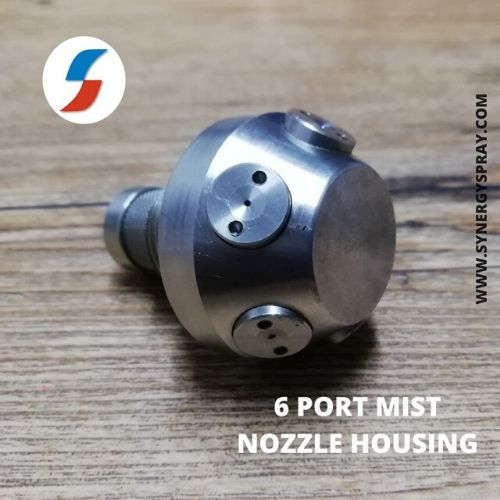
Mist Nozzles
Fine-orifice nozzles that turn pressurised water into a flash-evaporating fog for cooling, humidification, dust and odour control.
Explore
Plastic Nozzles
Corrosion-resistant nozzles in PP, PVDF and PVC for chemicals, pretreatment tunnels, plating lines and scrubbers.
Explore
Spray Nozzles
Choose by spray pattern, flow, droplet size and material. Every nozzle family below links to its application guide, product range and a quick RFQ.
Explore