
Passive wind and dust barrier
Wind Fence for Dust Control in Assam
The source page presents wind-fence and dust-barrier options for open industrial areas in Assam, including coal handling, cement, construction, mining, quarrying, logistics and bulk-material storage.
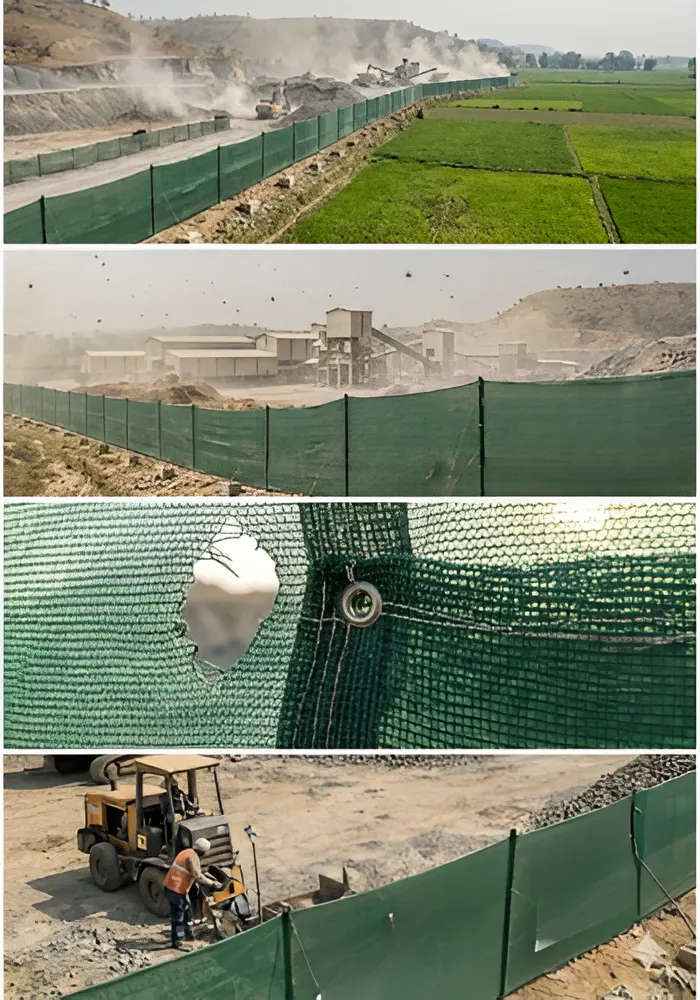
Open stockpiles and handling areas can expose dust to wind
The source highlights industrial zones near the Brahmaputra river belt and open plains, where wind can spread dust from stockpiles and material-handling areas.
Dust leaving the site
The source identifies dust pollution affecting nearby residential areas as a concern.
Loss of fine material
The source names coal, clinker and aggregates as fine materials that can be lost through wind-driven dispersion.
Compliance challenges
The source identifies pollution-control compliance as another reason to review dust containment.
Application areas organised by location and activity
Coal yards
The source associates Tinsukia and Dibrugarh with coal-yard and stockpile wind-fence systems.
Construction projects
The source associates Guwahati with construction-site dust screens and dust-mitigation screens.
Mining and quarrying
The source associates Upper Assam with quarry dust barriers and particulate-control fencing.
Industrial zones
The source associates areas near Silchar with perimeter dust barriers and site windbreak systems.
Wind-barrier formats described for different site conditions
The source page lists four system descriptions. Final material, porosity, height, support structure and foundation are not specified and require engineering confirmation.
Heavy-duty wind fence
Presented by the source for high-wind coal-yard conditions.
Flexible suppression fence
Presented by the source as a lightweight screen for airflow and dust-spread control.
Modular wind barrier
Presented by the source as a customisable perimeter or bulk-material barrier.
Dust Tamer system
Named by the source as an integrated option for higher-dust industrial operations.
Contain dust without continuous water or electricity
The source describes the wind barrier as a passive approach and lists reduced airborne particulate, less dust spread from open storage, protection for nearby areas, and improved visibility and workplace safety. Results depend on site design and operating conditions.
Confirm wind exposure, boundaries, climate and structure
The source says systems are designed around site wind patterns and industrial requirements, and refers to humidity, rainfall and outdoor exposure. These are project claims that need site and structural confirmation.
- Site plan, stockpile dimensions and exposed boundaries
- Dust source, material and handling sequence
- Local wind direction, speed range and seasonal variation
- Required fence height, access openings and nearby receptors
- Ground conditions, structural loads, drainage and maintenance access
Dust-barrier illustrations published on the Assam page
The source page uses files whose names and alt references mention Arunachal Pradesh. They are preserved because they are the original Assam-page assets, but they should not be treated as verified Assam project photographs.
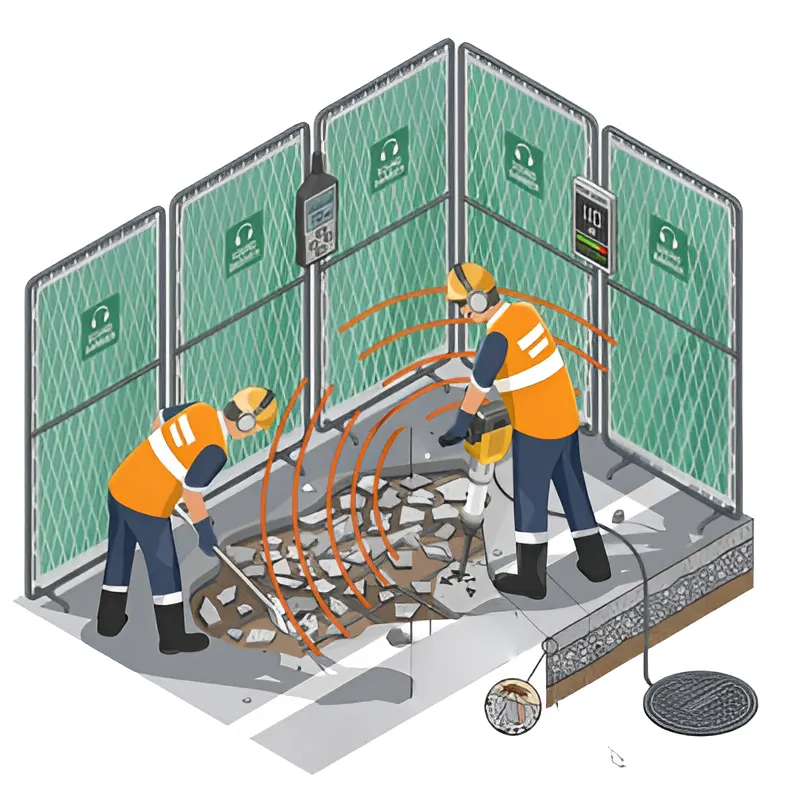
Wind-fence questions for Assam
The source includes four answered questions. Two unanswered questions are deliberately omitted.
Where are wind fences commonly used in Assam?
The source names industrial areas such as Guwahati, Dibrugarh, Tinsukia and Silchar, with coal-yard and construction-site contexts.
Is a wind fence suitable for Assam’s weather conditions?
The source says its systems are designed for Assam’s humidity and seasonal wind conditions. Actual material, structural and weather suitability requires project-specific confirmation.
Which industries does the source associate with dust fencing in Assam?
The source lists mining, cement, construction and logistics.
Does a wind fence require power or water?
The source describes the wind barrier as passive, without electricity or continuous water use. Confirm the complete project scope because other dust-control equipment may use utilities.
Share the yard layout, material, wind exposure and boundaries.
Provide the location and site constraints needed to review an appropriate wind-barrier arrangement.