
Misting System Buying Guide for Industry
What to check before buying a misting or fogging system: purpose, pressure, nozzles, pump, water treatment, controls and maintenance.
A misting system only works as well as its weakest component. Use this checklist before you compare quotations.
1. Purpose decides the design
Cooling, humidification, odour control and dust suppression need different nozzle densities, run times and controls.
2. Pressure
Low-pressure systems are simple but produce larger droplets that can wet surfaces. High-pressure systems produce finer fog that evaporates quickly.
3. Nozzles
Look for stainless steel orifices, anti-drip check valves and cleanable designs. See our mist nozzles.
4. Pump
The pump must deliver the total nozzle flow at the design pressure with margin. See misting pump set-ups.
5. Water treatment
Fine orifices need filtration; hard water needs softening or RO to avoid scaling.
6. Lines and fittings
High-pressure rated tubing and fittings such as slip lock connectors avoid leaks.
7. Controls
Timers, humidity or temperature controllers and zoning keep water use in check.
8. Maintenance
Ask what routine checks are needed and which spares to keep.
Related solutions

Misting & Fogging
High-pressure pumps, fine mist nozzles and controls engineered as one system, for cooling, humidification, odour and dust control.
Explore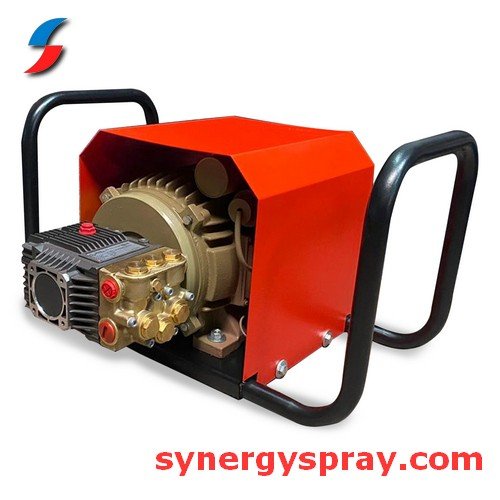
Misting Pumps
The heart of a misting system: a high-pressure pump with filtration, motor and controls matched to the nozzle count.
Explore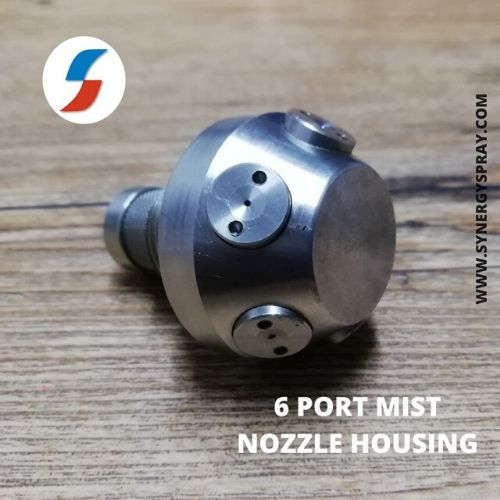
Mist Nozzles
Fine-orifice nozzles that turn pressurised water into a flash-evaporating fog for cooling, humidification, dust and odour control.
Explore
Slip Lock Connectors
Push-fit fittings for high-pressure misting tubing: straight connectors, tees, elbows and end plugs.
Explore