
Dry Fog vs Wet Fog Dust Suppression: Which to Choose?
How dry fog and wet fog dust suppression differ in droplet size, moisture added, utilities and best-fit locations, with a simple selection checklist.
Both approaches use water droplets to capture airborne dust. The difference is droplet size, how much moisture reaches the material, and what utilities each needs.
How dust capture works
A droplet captures a dust particle most effectively when the two are of similar size. Very fine fog collides with and agglomerates respirable dust; larger droplets mainly wet the material surface so dust does not lift off in the first place.
Dry fog in brief
- Very fine droplets, usually produced with compressed air and water.
- Adds very little moisture to the material.
- Works best in enclosed or semi-enclosed points such as transfer chutes, hoppers and crusher discharges.
- Needs clean water, compressed air and careful nozzle placement.
Wet fog and plain-water sprays in brief
- Larger droplets from high-pressure water or plain-water spray headers.
- Wets the material, which suits stockpiles, conveyors and open points.
- Simpler utilities: water and a pump; no compressed air in most designs.
- Not suitable where the process cannot accept added moisture.
Selection checklist
- Can the material accept added moisture? If not, start with dry fog.
- Is the point enclosed? Fog works best where it is contained.
- Do you have compressed air available near the point?
- What water quality is available? Fine nozzles need filtration.
- Is the dust source open to wind? Consider fog cannons, rain guns or wind fences.
Every site is different, so treat this as a starting point. Send us the dust source and utilities and we will recommend a layout.
Related solutions
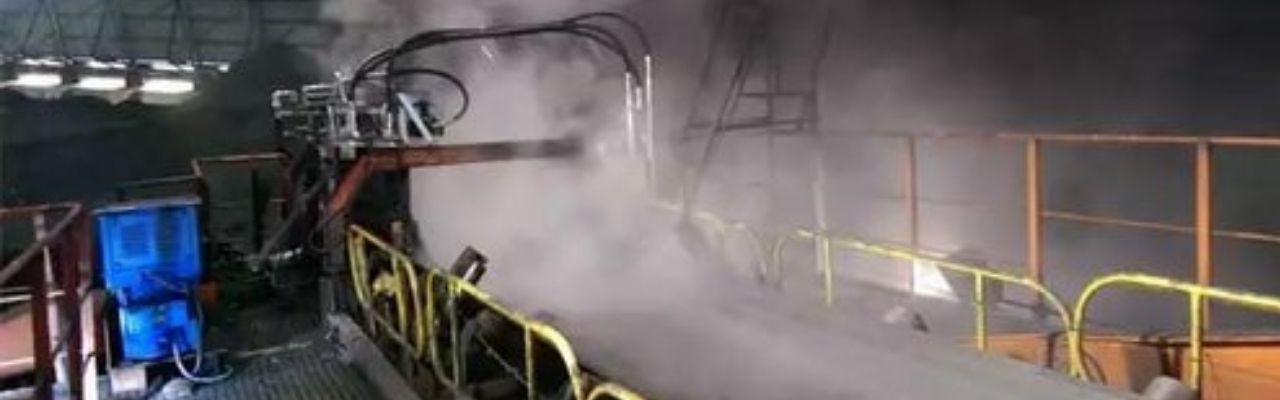
Dry Fog Systems
Micron-sized fog that agglomerates fine dust at enclosed transfer points with very little added moisture.
ExploreWet Fog Systems
High-pressure water fog for crushers, screens and conveyors where light wetting of the material is acceptable.
ExplorePlain Water Systems
Spray headers, pumps and controls that wet the material at the source: simple, robust and economical.
Explore
Dust Control
Start with where the dust is generated. We match dry fog, plain-water spray, fog cannons, sprinklers or wind fencing to the source, the material and your water supply.
Explore